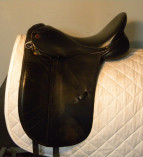
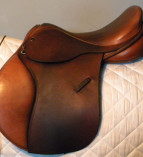
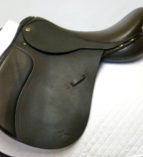
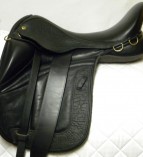
Trumbull Mountain Tack shop offers used saddles, new saddles, saddle fitting, and saddle pads from the saddle specialist. Your saddle shopping experience is more successful when we are able to personalize the experience. We offer a saddle-fitting questionnaire, which helps with the most informed recommendations, conformation shots and tracing/templates. We make every effort to fit the rider and the horse to allow for a harmonious ride, ensuring good communication between horse and rider.
Our company offers a 7-day trial of the chosen saddle to try out. This trial period applies to any new or used saddle we have. The saddle is allowed to be used in any way the customer may like. Returning the saddle is very easy; just return the saddle back within the 7-day trial period. Read more about our saddle trial policy. Trumbull Mountain Tack shop backs their customers every step of the way when purchasing saddles.
We have a full inventory of saddles for sale including new saddles and used saddles for sale: dressage, jumping, all purpose, and endurance. We also carry a limited stock of fittings, saddle pads, bridles and saddle leather care products. Also be sure to check out our Saddles on Sale and Clearance Items.
We feel that saddle shopping is more successful when we are able to personalize the experience. We like to talk with you about your horse, read your saddle fitting questionnaire, evaluate your conformation shots and tracings/templates, if available, and then offer comprehensive saddle recommendations tailored to you and your horse. It is our hope that by doing so, we will make the saddle shopping experience as easy and positive as possible.
Please take your time to explore what we have. One feature that is extremely helpful is our new search engine. We are very proud that our website offers such options as Twitter


 2046 US Route 7